
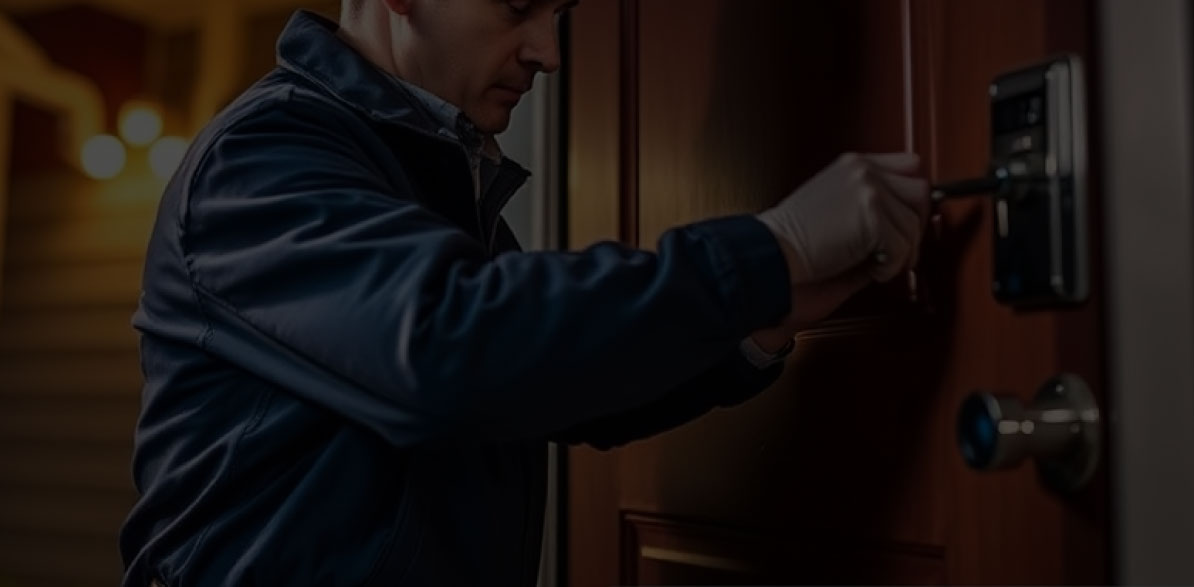
How Non-Destructive Entry Works: No Drilling, No Damage
One of the biggest worries when you are locked out is the damage. Many people picture a drill chewing through the lock and a hefty bill for a replacement. In reality, a skilled locksmith opens most doors using non-destructive entry (NDE) — techniques that leave the lock fully working afterwards. Here is what that actually involves.
What "non-destructive" really means
Non-destructive entry is any method that opens a locked door without damaging the lock, the door or the frame. Done correctly, you can carry on using the same key afterwards. It is the standard approach a professional reaches for first; drilling is a last resort, not an opening move.
The main techniques
Lock picking
Picking manipulates the internal pins of a cylinder to mimic the action of the correct key. For pin-tumbler and many Euro cylinder locks, a locksmith uses fine picks and a tension tool to set each pin in turn until the cylinder rotates. It takes skill and the right tools, but it leaves no trace.
Bypassing the latch
Some lockouts do not need the lock opened at all. If a door is only on the spring latch (not deadlocked), the angled latch can sometimes be slipped back without touching the cylinder — quick and completely non-destructive.
Letterbox and through-the-door tools
Where a thumbturn or internal handle can be reached, specialist tools allow it to be operated safely from outside without forcing anything.
Euro cylinder methods
For uPVC and composite doors, the Euro cylinder is the focus. Depending on the cylinder, a locksmith may pick it or use a controlled technique to defeat it, then fit a new anti-snap cylinder afterwards if the old one was weak. If you have been the victim of a snap attack and the door will not lock, that is a different job — see our guidance on burglary repairs and property boarding.
When drilling is genuinely necessary
Non-destructive methods do not work in every case, and an honest locksmith will tell you when. Drilling may be the right call when:
- The lock is a high-security, anti-pick, anti-drill cylinder specifically designed to resist NDE.
- The mechanism has seized or a component has failed internally.
- A key has snapped deep inside and cannot be extracted — though often it can; see snapped key extraction in Birmingham before assuming the worst.
Even then, drilling is targeted at the cylinder only, and a replacement is fitted immediately so you are not left insecure.
What to expect during a callout
- The locksmith identifies the door and lock type.
- They explain the likely method and confirm the price before starting.
- They attempt non-destructive entry first.
- You are back inside, usually with your original lock and key still working.
Why this matters for cost and security
NDE keeps your costs down because you are paying for the locksmith's skill and time, not a brand-new lock you did not need. It also means a beware-the-drill mindset is a useful filter: if someone arrives and immediately wants to drill a standard cylinder, you may be dealing with the wrong person. For more on what a fair lockout visit looks like, see our guide to being locked out in Birmingham.
The bottom line
Being locked out is stressful, but it rarely has to be destructive. A competent locksmith treats your lock as something to open, not break — and in the majority of cases you will walk back through your door with everything intact.